Managing Highs and Lows on the iLet Bionic Pancreas
When you first start using the iLet, your glucose levels may occasionally go a bit high or low as the system learns how much insulin your body needs. This is completely normal and will improve as the iLet gets to know you better. Each of these moments helps the iLet learn your insulin needs, so it’s important to respond appropriately.

Managing Highs
You only need to respond to a high if you have a failed infusion set or the iLet is not delivering insulin.
Meal announcements should not be used to treat highs. If your glucose is high before a meal, do not adjust your meal to a larger size than what you plan to eat. The system is already working to resolve the high, so incorrectly announcing puts you at risk for lows and impacts the system’s learning.
Managing Lows
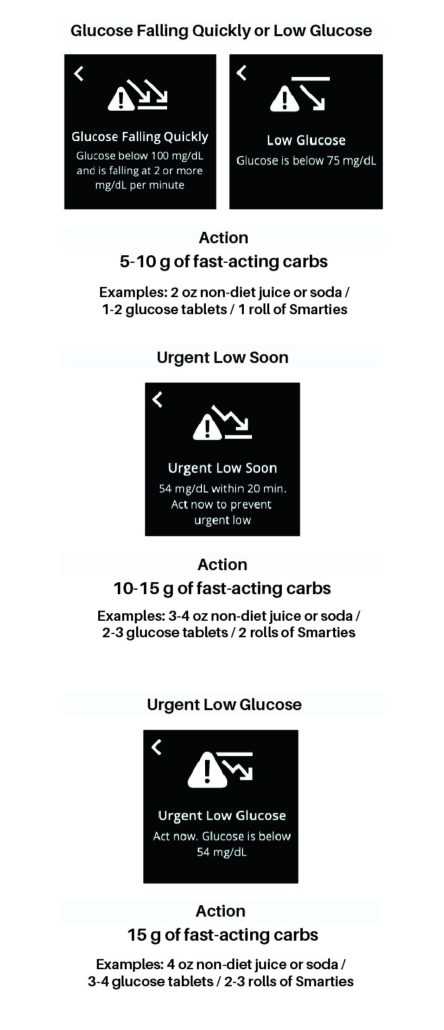
When your glucose is low or falling, the iLet will automatically give you less insulin or stop insulin dosing completely. If your glucose goes low, treat it with fast-acting carbohydrates. Be careful not to overtreat, as eating more carbs than needed can raise your glucose too high and lead the system to deliver additional insulin.
Only treat lows if you get a Glucose Falling Quickly, Low Glucose, Urgent Low Soon, or Urgent Low Glucose alert. Treating when you get the Glucose Falling Quickly or Urgent Low Soon alert can help to avoid low glucose and the accompanying symptoms.
If glucose doesn’t rise with fast-acting carbs after 15 mins, confirm with a fingerstick and treat again if needed. The goal is to keep your glucose in the 70-130 mg/dL range.
Do not pause the iLet to try to prevent or treat low glucose. Your iLet has already stopped delivering insulin to help bring your glucose back up.
For more information, please click here to access the iLet Quick Reference Guide or User Guide.
